Menu
Close

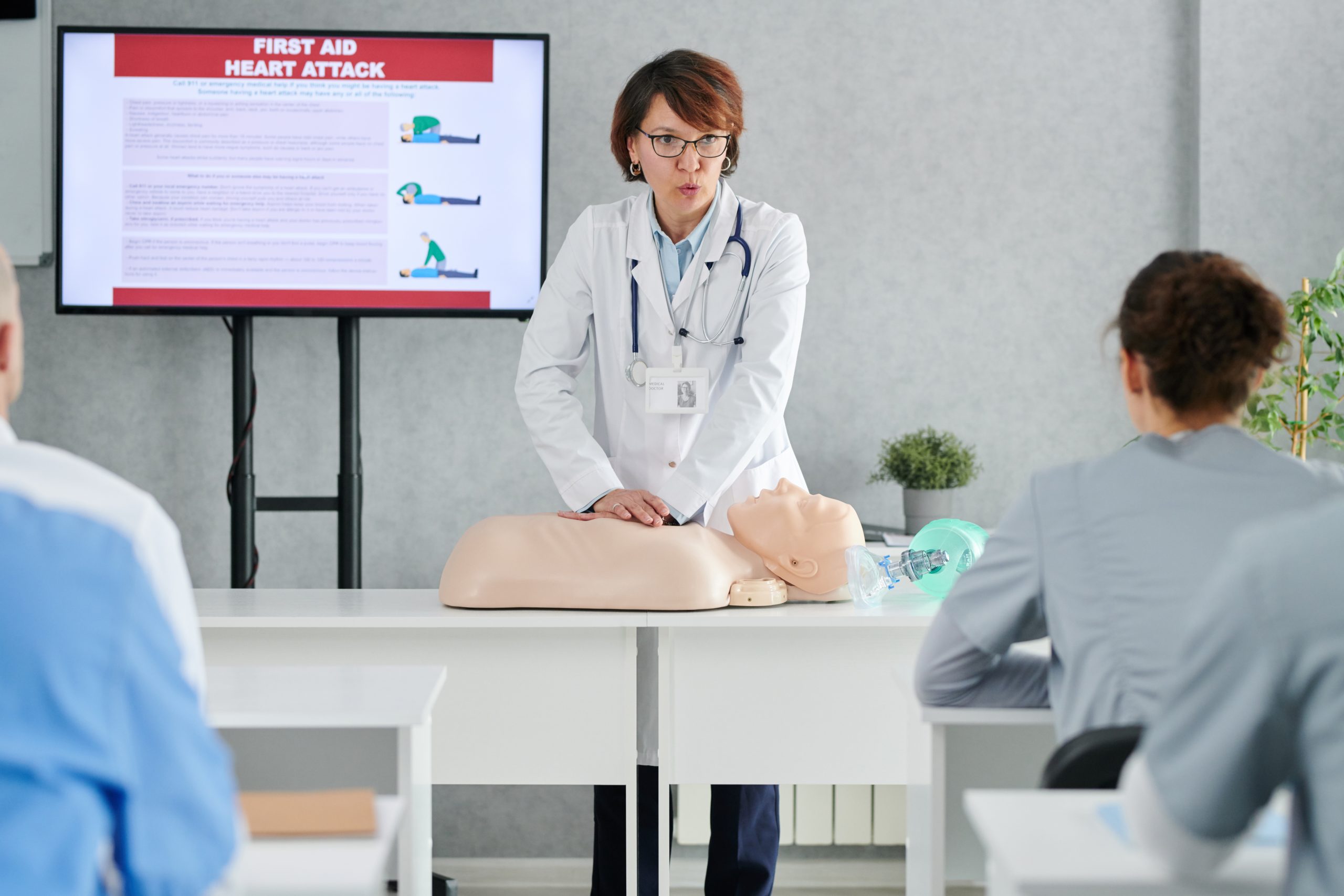
Instructors know the classic classroom scene. You stand over a room of students practicing chest compressions. You constantly repeat the same phrases: push harder, slow down, or release completely.
Evaluating ten people at the same time makes it easy to miss subtle errors. A student might hit the right speed but fail to let the chest fully recoil. Another might push deep enough at first but shallow out as fatigue sets in.
Traditional plastic manikins cannot tell the student when they slip out of form. This is where Quality CPR technology changes the entire dynamic of your classroom.
Old-school training equipment relies entirely on manual observation or a simple mechanical clicker. Clickers only tell you if a student hit a specific depth threshold. They do not measure the speed of the compressions, proper hand positioning, or whether the student is leaning on the chest between strokes.
This lack of data forces instructors to act as human safety cameras. You must track every single movement, which is exhausting and prone to human error.
Traditional Training: Visual observation ➔ Instructor corrections ➔ Student guesses adjustment
QCPR Training: Digital sensors ➔ Instant app feedback ➔ Student immediately fixes form
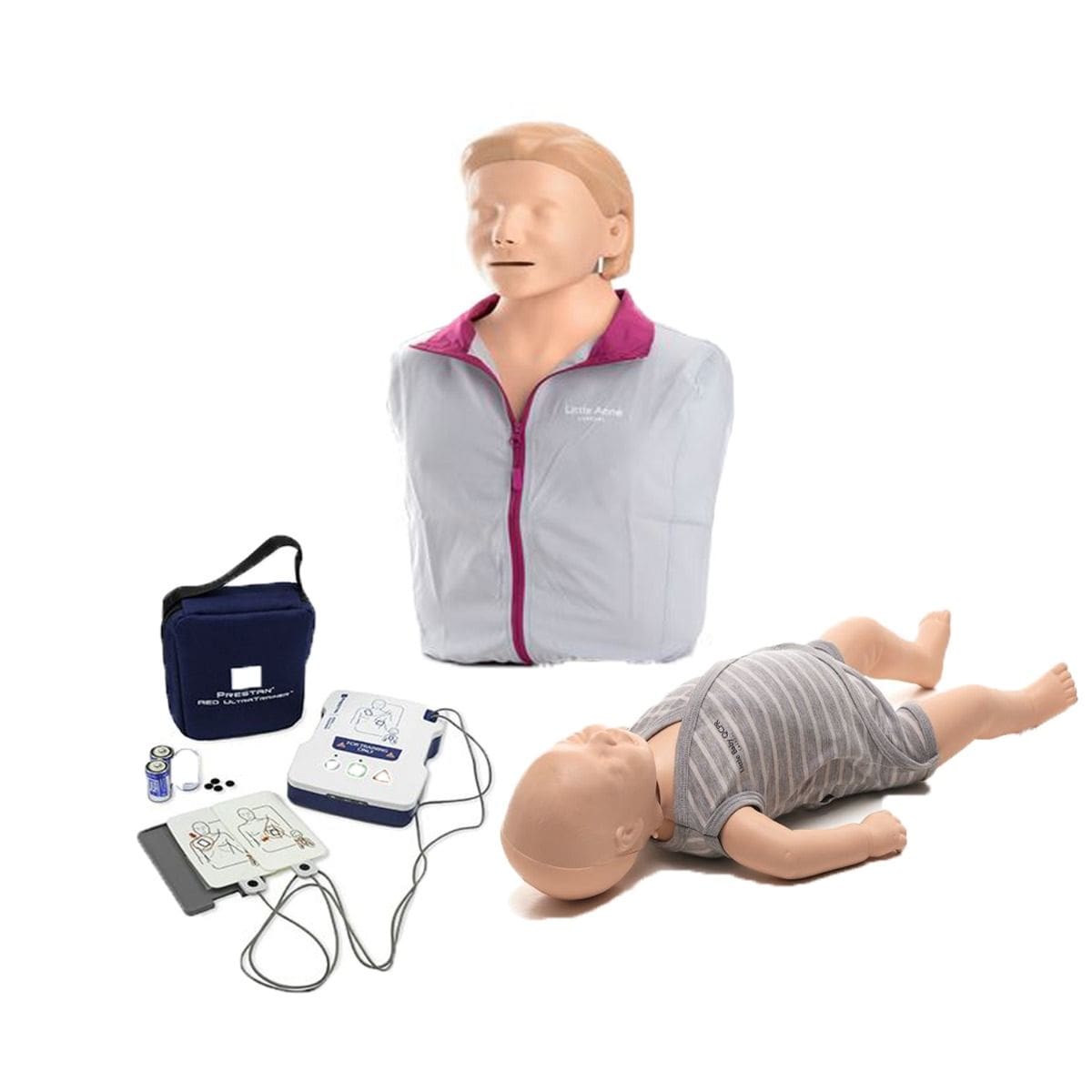
Modern CPR feedback technology utilizes precision electronic sensors embedded within the torso of the manikin. These sensors track the exact downward displacement of the chest during a compression. They also calculate the speed of each stroke and measure whether the chest returns completely to its resting position.
The internal electronics send this information to an external screen or a mobile app via Bluetooth. The system converts raw movement data into easy-to-read visual metrics.
This digital measurement occurs multiple times per second. It gives students an objective mirror reflecting their exact physical performance.
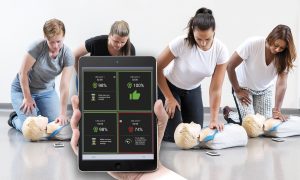
Every instructor encounters students who struggle with the physical demands of life-saving techniques. Some students display poor technique because they fear hurting the equipment. Others simply do not understand what two inches of depth feels like in practice.
Visual instructions alone rarely bridge this gap. Students need an immediate response to understand how their physical exertion translates into proper medical technique.
When a student sees a red line on a tablet screen, they do not need you to tell them to press harder. They see the deficit themselves and adjust their physical effort instantly.
This shifts the instructor’s role from a critical enforcer to a supportive coach. Instead of micromanaging basic movements, you can focus on advanced rescue concepts, team dynamics, and situational awareness.
The manikin handles the repetitive task of correcting basic mechanics. This makes the learning environment more interactive and less stressful for everyone involved.
Many classrooms include professional lifeguards, workplace safety wardens, and healthcare providers who take these courses repeatedly. According to data regarding Canadian safety standards, professionals must refresh their skills regularly, which you can read about on First Aid 4 U.
These recurring students often experience boredom during basic skills practices. They have gone through the motions multiple times and think they have perfect form.
Digital tracking systems allow you to introduce friendly competition into these sessions. You can display group leaderboards showing who achieves the highest overall percentage score.
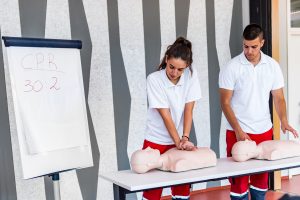
Test anxiety ruins performance for many capable students. When the formal evaluation portion of the class begins, nerves take over. Students lose their rhythm, push too fast, and forget to monitor their compression depth.
High failure rates damage the reputation of your training agency. They also force you to spend extra unpaid hours running remedial sessions for students who failed their first attempt.
Real-time tracking solves test anxiety by building deep muscle memory through continuous visual confirmation. When a student spends thirty minutes practicing with a live feedback loop, their muscles learn the exact resistance needed to hit the correct depth.
They memorize the specific rhythm required to stay within the 100 to 120 beats per minute window. By the time the formal testing phase arrives, their bodies know exactly how the correct movement feels.
Training Without Digital Feedback:
Training With Live QCPR Feedback:
If a student fails an evaluation on a traditional manikin, they might argue that the instructor was being too strict. They feel judged based on personal opinion rather than factual performance.
Digital monitoring systems eliminate this friction entirely. The app provides a final percentage score based on mathematical measurements of depth, rate, and recoil.
If a student scores an 85% instead of the required passing grade, they can see exactly where they lost points. They might see that their depth was perfect but their chest recoil was only 40%. This clear data removes emotional arguments and shows the student exactly what they need to fix to pass.
Operating a first aid training business in Canada requires strict adherence to national and provincial governing bodies. Organizations like the Heart & Stroke Foundation of Canada routinely update their program guidelines to reflect global resuscitation science.
Failing to meet these standards during an official audit can lead to serious consequences. Your training agency could face probation, suspension, or the loss of your provider credentials.
The Heart & Stroke Foundation mandates the use of directive feedback devices for specific course levels, including Basic Life Support (BLS). Instructors can no longer use basic plastic shells without interactive technology for these certifications.
Using compliant equipment ensures your business remains fully authorized to issue official certificates. It protects you from liability and demonstrates a commitment to professional training standards.
Required Metrics for Canadian Compliance:
An auditor can ask to see how you evaluate student competency during an official inspection. If you rely solely on manual observation, you have no recorded proof of student performance.
Smart training equipment allows you to save digital performance logs for every class session. You can archive these reports to prove that every certified student met the strict quantitative benchmarks required by law. This digital paper trail makes institutional audits stress-free and straightforward.
Upgrading your classroom equipment requires upfront capital. Many business owners and school board administrators hesitate when looking at the price tag of advanced smart manikins.
However, viewing this equipment purely as an expense ignores the substantial return on investment it brings to your business.
When students fail their initial evaluation, it costs your company money. You have to schedule extra floor space, pay instructors for additional hours, and manage the administrative overhead of re-testing.
By using real-time tracking, your first-time pass rates climb dramatically. Most students correct their errors during regular practice time, eliminating the need for remediation outside of class hours.
To modernize your business efficiently, look for bundled equipment setups designed specifically for professional agencies. You can review current options by browsing through our collection of CPR instructor packages. These kits combine multiple feedback manikins and monitoring tools into discounted bundles.
Upgrading your inventory changes how you market your business. You can confidently tell local corporate clients that your courses use advanced digital training systems to maximize their safety budget.
If you want to discuss which specific smart manikins fit your current curriculum requirements, feel free to reach out to our team directly through our contact page for expert guidance on Canadian compliance gear.
It stands for Quality CPR. It refers to training technology that uses built-in smart sensors to measure compression depth, speed, and chest release to give users immediate performance metrics.
Older units without feedback mechanisms do not meet the current directive feedback requirements for professional tiers like Basic Life Support. You must upgrade them or use conversion kits to stay compliant.
No. While many systems connect directly to smartphone apps via Bluetooth, instructors can also link multiple units to a single central tablet or use standalone monitor screens built into the equipment.
Yes. Studies show that immediate visual confirmation helps students memorize proper physical mechanics much faster than verbal coaching alone, which leads to higher success rates during testing.
The internal sensors measure the expansion of the chest cavity during ventilations. The connected app tracks whether the volume of air delivered was sufficient, excessive, or too fast.