Menu
Close

First aid instructors across Canada are seeing a shift in classroom expectations. As the opioid crisis continues to affect communities from coast to coast, the demand for practical, hands-on overdose response training has moved from specialized clinics into general workplace safety. In Ontario, the legislative environment has changed rapidly, making it necessary for training providers to understand Workplace Naloxone Training Ontario requirements.
Incorporating this into your existing curriculum is not just a trend. It is a response to evolving safety standards and a way to ensure your students leave your course prepared for modern emergencies. Whether you are teaching a corporate group or a public session, adding naloxone training provides immense value to your participants and helps businesses meet their legal obligations.
Since June 2023, certain employers in Ontario have been required by the Occupational Health and Safety Act (OHSA) to have naloxone kits on-site. This requirement applies if an employer becomes aware—or ought to be aware—that there is a risk of a worker having an opioid overdose at the workplace. This isn’t limited to “high-risk” industries. It includes any environment where the risk exists, placing a new responsibility on safety managers to ensure their staff is competent.
For instructors, this means your students are often looking for more than just a CPR certificate. They are looking for compliance. By including a module on naloxone, you satisfy the training requirements set out under Bill 88, which specifies that workers in charge of the kits must be trained to recognize an overdose and safely administer the medication.
Many instructors worry that adding a new topic will overwhelm an already packed 13-hour Standard First Aid schedule. However, naloxone training is remarkably efficient when integrated correctly. You don’t need to reinvent the wheel to learn how to add naloxone to first aid course curricula.
The most effective way to teach this is to bridge the topic with existing respiratory and cardiac emergency modules. When you discuss “Respiratory Emergencies” or “Unconscious Casualties,” you can introduce opioid poisoning as a specific cause. This allows you to teach the “Check, Call, Care” model while simply adding the administration of naloxone as an additional “Care” step.
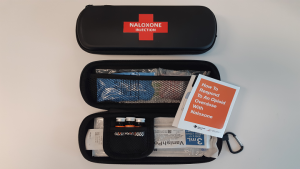
A major pain point for many training agencies is the lack of proper training aids. You cannot use real naloxone for practice, and simply showing a video doesn’t build the muscle memory required for a high-stress emergency. To provide high-quality training, you need reusable nasal spray trainers.
These devices mimic the exact feel and resistance of a real Narcan spray but contain no medicine. They allow students to practice the physical action of inserting the nozzle and depressing the plunger. Having enough equipment for a class ensures that every participant gets hands-on time, which significantly reduces the “fear of doing it wrong” that many students feel.
You can find the necessary supplies for your classroom at the CPR Depot First Aid collection, including trainers and high-visibility carrying cases that make kits easy to find in a workplace setting.
One of the hardest parts of teaching overdose response is managing the stigma associated with drug use. Some students may feel that this training doesn’t apply to their workplace. As an instructor, your role is to frame this as a medical emergency, no different from a heart attack or a diabetic crisis.
Using “person-first” language is vital. Instead of “addict” or “junkie,” use “person with a substance use disorder” or “person experiencing an overdose.” Highlighting that many overdoses occur from prescription medications taken for chronic pain can help bridge the gap for corporate audiences who might otherwise be dismissive of the training.
A common question in every Ontario first aid class is: “Will I get sued if I use naloxone and they didn’t need it?” You can reassure your students by citing the Good Samaritan Drug Overdose Act.
This federal law provides legal protection for individuals who seek emergency help during an overdose. It protects the person who is overdosing and the person who calls for help from charges of simple possession. In a first aid context, it reinforces the idea that doing something is better than doing nothing. Naloxone is a very safe drug; if administered to someone who is not experiencing an opioid overdose, it will generally have no effect. This fact alone usually alleviates the “fear of liability” for most participants.
It is important to clarify that naloxone does not replace CPR. If a casualty is not breathing, CPR must be started immediately. Naloxone is a tool that helps restore the casualty’s ability to breathe on their own, but it takes 2 to 5 minutes to work. During that window, the brain needs oxygen.
Teaching your students to perform rescue breaths or high-quality chest compressions while the naloxone takes effect is the key to a successful rescue. For a deeper look at how these interventions interact, you can read about the difference between First Aid and CPR to help clarify these distinctions for your students.

If you are a business owner or safety manager attending a course, here is how you move from training to implementation:
If you have questions about which kits are right for your specific industry, you can contact CPR Depot for expert advice on Canadian-compliant safety gear.
Is naloxone training mandatory for all Ontario workplaces? No. It is mandatory only for workplaces where the employer is aware, or ought to be aware, of a risk of a worker opioid overdose. However, many proactive employers are opting for training to ensure overall safety.
Can I use an expired naloxone kit for training? No. Expired kits should be disposed of properly. For training purposes, you should always use dedicated, reusable nasal spray trainers to ensure safety and consistency.
How often does naloxone training need to be refreshed? While the OHSA does not specify a strict expiry for naloxone training, it is best practice to refresh these skills every 2 to 3 years, coinciding with your Standard First Aid recertification.
Does the Good Samaritan Act protect me at work? Yes. The Act provides protection to anyone responding to an overdose in an emergency capacity, regardless of the setting.
Where can I buy naloxone trainers in Canada? You can purchase high-quality, reusable nasal trainers and complete workplace kits from specialized distributors like CPR Depot Canada.