Menu
Close

Buying an AED is a responsible move. It also creates a false sense of completion for a lot of organizations.
If you’re reading this, you’re probably feeling that tension. You want an AED program that works in real life, not just on paper. You also don’t want to waste money on extras you don’t need.
This guide is here to make the “accessories” part simple. You’ll learn what matters most, why it matters, and how to avoid the most common readiness gaps.
When most people search AED program accessories, they aren’t shopping for gadgets. They’re trying to answer a practical question.
“What do we need besides the AED?”
The best way to think about accessories is this: they’re the pieces that make the AED easy to find, easy to access, and ready to function. In a high-stress moment, those three things are what keep a good intention from becoming a delay.
An AED can be a safe, easy-to-use device, designed to guide a rescuer through the steps. Heart & Stroke describes AEDs as portable and easy to use, delivering a shock only if needed.
But that only helps if the device can be used quickly. The most common reasons AED programs fall short aren’t technical. They’re operational.
In Canada, there isn’t a single national occupational health and safety law that requires AEDs in every workplace. That’s one reason programs vary so much. CCOHS notes that OHS legislation does not specifically require employers to have AEDs installed, though guidance and best practices still matter.
This is exactly why accessories and ownership matter. When rules differ, your program needs clear internal logic.
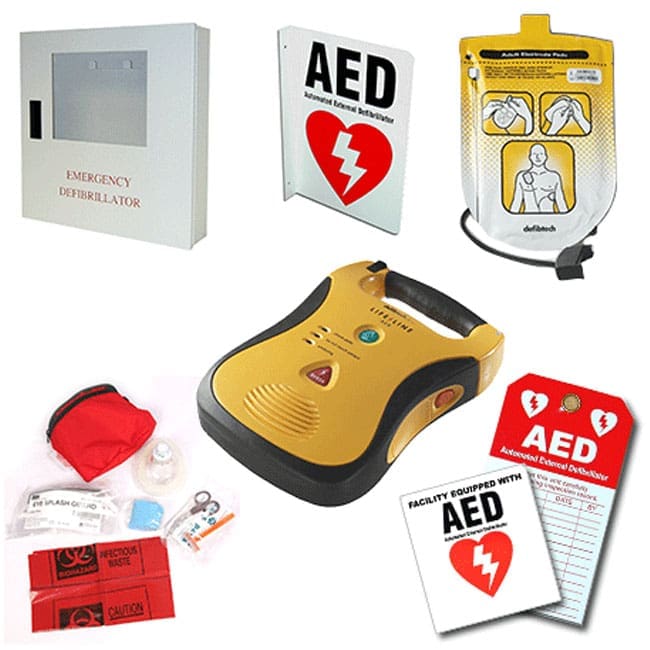
This section covers the accessories that tend to make the biggest difference in response time and reliability. These are the items most organizations should consider first.
Pads are not one-size-fits-all. Many AEDs have adult pads and separate options for pediatric use, depending on the environment and device model.
A school, community centre, or family-oriented facility may need a plan for pediatric response. A workplace with only adult staff may prioritize adult pads and clear replacement timing.
What matters most is that your pads are correct for your device, stored properly, and replaced before expiry.
Batteries are another silent failure point. The device may look fine on the wall while the battery is nearing end-of-life, or the readiness indicator isn’t being checked regularly.
A practical approach is setting a predictable rhythm for checks. You don’t need a complex system. You need one accountable person and a routine.
A cabinet isn’t just about looks. It’s about making the AED consistently visible and protected, without slowing access.
If your facility worries about theft or tampering, many organizations choose an alarmed cabinet rather than hiding the AED. Hiding creates a different risk: the AED exists, but nobody finds it in time.
Cabinet placement matters as much as the cabinet itself.
Signage is one of the most overlooked accessories, and one of the cheapest ways to reduce hesitation.
In an emergency, people don’t scan walls like they do during a fire drill. They look for quick cues. Good signage helps a first-time visitor find the AED without asking permission or searching hallways.
CCOHS emphasizes AEDs should be in a conspicuous place and accessible, with considerations that support quick access.
Signage works best when it’s repeated.
Some organizations keep a small set of support items with the AED so responders aren’t improvising. The exact items depend on your policies and training level, so avoid overcomplicating it.
Think “reduce friction.” If something routinely slows response in your environment, solve for that.
Keep this aligned with your training provider’s advice and local policies. This isn’t medical advice, and your organization should follow manufacturer instructions for your specific AED model.
If you’ve ever thought, “Someone should probably be checking this,” you’ve found the real problem.
AED programs fail most often when ownership is vague. That happens in schools, multi-tenant buildings, community facilities, and even small businesses where responsibilities shift.
A good program answers three questions clearly.
If multiple people share the responsibility, it’s easy for nobody to truly own it. That’s how expired pads happen.
A clean solution is assigning a primary owner and a backup owner, then putting the task into an existing routine, like monthly facility checks.
Most issues are avoidable, and they’re usually simple.
Here are the patterns that show up again and again in real facilities.
If your goal is readiness, design for the person who has never used your building before. That’s often the person grabbing the AED.
To choose AED program accessories confidently, base decisions on how your space works.
If your building layout is complex, accessories like directional signage and additional wall cabinets can matter more than extra “features.”
Also remember: equipment choice should match your program plan. Health Canada describes AEDs as devices used in public areas to help restart a heart if it has stopped beating. Your program should support the goal of rapid access and use, not just device ownership.
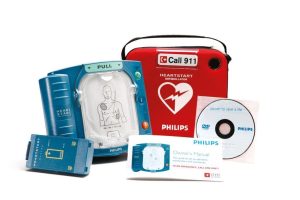
If you’re building or upgrading your program, start by reviewing AED options and accessory needs together. That’s usually where the best decisions happen.
Browse AED products and related items here: https://cpr-depot.ca/product-category/aed/
When you want help choosing the right setup for your facility and traffic patterns, contact CPR Depot Canada here: https://cpr-depot.ca/contact/
Small upgrades in visibility, ownership, and accessory readiness can make your AED program feel complete, not “almost done.”
1) What accessories are needed for an AED program?
Most programs rely on pads and a battery plan as essentials, plus a cabinet and signage so the AED is easy to find and access quickly. Your exact needs depend on your building, traffic, and who uses the space.
2) Do AED pads expire in Canada?
Yes, AED pads have expiry dates set by the manufacturer. A reliable program tracks these dates and replaces pads before they expire, following the AED manufacturer’s instructions.
3) Should an AED be in a cabinet or mounted on the wall?
Many organizations use a cabinet to keep the AED visible and protected. The key is that access should be quick, and the location should be obvious to someone who doesn’t know the building.
4) Who is responsible for maintaining an AED program?
A program works best when one person is clearly assigned to monthly visual checks and replacement scheduling, with a backup owner to avoid gaps when roles change.
5) Are AEDs required in Canadian workplaces?
Requirements vary by jurisdiction and setting. CCOHS notes there is no OHS legislation specifically requiring AEDs in workplaces across Canada, so many organizations implement AED programs as part of broader safety planning.