Menu
Close

If you’re responsible for a building, you’re probably not asking this question for fun. You’re asking because you want an AED on-site, but you also want to know you placed it where it actually helps.
You might also be thinking about two things at once: speed and responsibility. You want a bystander to find the AED quickly, and you want your organization to feel confident about the decision if an incident ever gets reviewed.
Here’s the good news. AED placement doesn’t have to be complicated to be effective. A few practical rules will get you to a solid plan.
This search usually comes from someone who has to make a real-world decision.
They may be a facility manager, a business owner, a school administrator, or a property manager. They want placement that works for normal days and still works when everything feels urgent.
Common concerns tend to sound like this:
Your goal isn’t to create a perfect map. Your goal is to remove delay and confusion, because delay is the enemy in cardiac arrest response.
A practical target used in many AED programs is designing for quick retrieval and use within a few minutes. One common approach is making sure people can reach an AED quickly from anywhere in the building, then return to the person in distress without getting lost. Guidance documents and program resources often frame this around a short walk time and rapid access.
That sounds technical, but you can make it simple by thinking in walking routes, not straight lines.
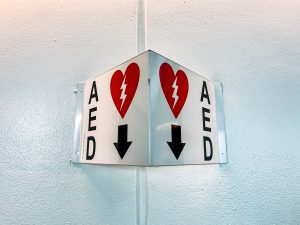
In an emergency, people don’t want to “search.” They want to spot.
Canadian workplace guidance emphasizes AEDs being in conspicuous, unobstructed areas so the public can access them quickly. That principle applies whether your space is a municipal building, a sports facility, or a private workplace that welcomes the public.
If theft is a concern, consider a wall cabinet with an alarm, plus good signage, rather than hiding the AED. Hidden devices can’t help if no one can find them fast.
Below are the placements that tend to work best because they match how people move, gather, and look for help.
This is usually the most reliable spot because it’s easy to describe and easy to find. It’s also where bystanders often run when they need help.
Strong lobby placement usually means:
If your building has a staffed desk, placing the AED nearby can work well, especially when staff are trained and can direct people quickly.
The key is making sure the AED is still accessible if staff are busy.
In many buildings, the “best” place isn’t a single room. It’s the central connector that leads to multiple zones.
Good hallway placement looks like:
If one AED has to cover a large footprint, a central corridor location often covers more people than placing it inside a specific room.
These areas combine higher physical exertion with higher foot traffic, so they’re common choices for AED placement.
This doesn’t mean you only place it in the gym. It means you prioritize fitness areas when deciding coverage and distance.
Large gatherings create a different challenge: crowds can block visibility, and noise can slow communication.
A good strategy is placing the AED where people enter and exit, not mid-seating where it gets hidden.
People gather here daily, and incidents aren’t limited to athletic spaces. High-traffic areas make sense because someone can retrieve the device quickly and others can help direct responders.
Places where the public queues and waits are strong candidates: community service counters, libraries, recreation check-in desks, and transit hubs.
If your building serves the public, think about where people would run to for help. That’s usually where an AED should be easy to spot.
If you manage outdoor spaces like sports fields, arenas with outdoor entrances, or seasonal event grounds, consider how response works when indoor doors are locked or far away.
If you only have budget for one AED right now, you can still make a smart choice.
Start by choosing a spot that covers the highest number of people for the highest number of hours. In practice, that’s often the main entrance/lobby or a central corridor intersection.
Then pressure-test it with real walking routes. Imagine someone needs to grab the AED from the farthest point in your building and return. If that route includes locked doors, long hallways, or confusing turns, you may need to relocate the AED or plan for a second unit later.
Canadian guidance also highlights registration and making AED location known to emergency services in some jurisdictions, which ties directly into “Is one enough?” thinking: a registered, easy-to-find AED that’s centrally placed is far better than an AED that exists but is hard to access.
It’s normal to worry about liability. Most organizations don’t want an AED to become “another thing to get wrong.”
A good way to reduce risk is to focus on program basics that are easy to document:
If you’re looking for a reputable overview of public access defibrillation programs and how laws and programs are structured, the CDC’s PAD resource is a useful reference point to cite in your article: https://www.cdc.gov/cardiovascular-resources/php/pad-slfs/index.html
Placement is only half the battle. The other half is making sure someone can find it in seconds, not minutes.
A practical approach: treat the AED like a fire extinguisher. People should know it exists and roughly where it is.
You can also add a simple internal note in staff onboarding or facility orientation: “AED location and emergency steps.” It’s small effort with big payoff.
Once you’ve decided where the AED should live, the next step is selecting a unit that fits your environment and support plan.
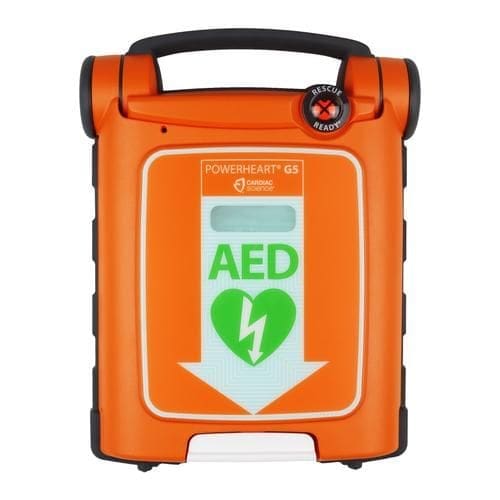
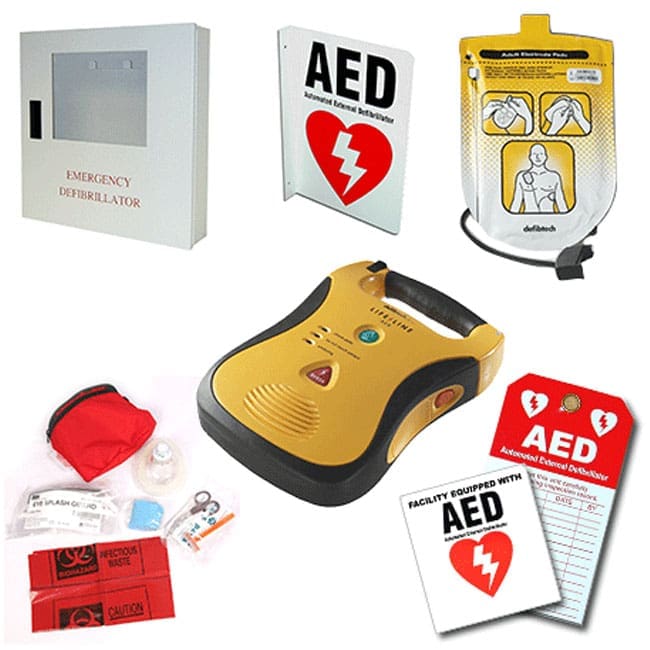
If you’re comparing options, start here to view AED units:
https://cpr-depot.ca/product-category/aed/units/
If you want help choosing an AED for your building layout, traffic level, and staffing, reach out for guidance here:
https://cpr-depot.ca/contact/
The goal is a setup your team can maintain confidently, with a placement strategy that makes sense to anyone walking into the space.
1) Where should an AED be placed in a public building?
Place it in a high-traffic, easy-to-see location such as the main entrance/lobby or a central corridor intersection. Prioritize visibility, quick access, and clear signage so a bystander can retrieve it without barriers.
2) Should an AED be locked in a cabinet?
Many organizations use alarmed cabinets for security, but the AED should still be quickly accessible. If access requires a key or staff assistance, retrieval can be delayed when seconds matter.
3) How many AEDs does my facility need?
It depends on building size, layout, floors, and how quickly someone can retrieve and return with the AED using real walking routes. If the farthest areas are separated by distance, locked doors, or multiple floors, more than one unit may be appropriate.
4) Are there AED placement rules in Canada?
Requirements can vary by province and by setting. Canadian workplace guidance highlights conspicuous, unobstructed placement and, in some jurisdictions, registration with emergency services.
5) What areas should be prioritized first?
Start with entrances/lobbies and central corridors, then prioritize higher-risk or high-traffic areas like gyms, arenas, pools, and large event venues.